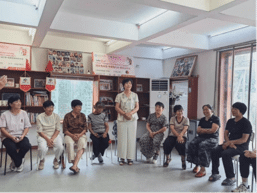
On 13 October, in Bangkok, during the Annual Meetings of the International Monetary Fund and the World Bank Group, the Southern Africa Resource Watch (SARW) convened a civil society side event, “A Continental Blueprint for African Strategic Minerals, Joint Industrial Policies and Diplomacy.”
That same day, in Beijing, during his meeting with President Duma Boko of Botswana, President Xi Jinping put forward four proposals for advancing China–Africa cooperation in the mining sector:
1) upholding the premise that Africa’s resources belong to Africa;
2) upholding a cooperative philosophy that balances shared interests and mutual benefit;
3) upholding the direction of high-quality development;
4) upholding a fair and open environment for cooperation.
Dr. Claude Kabemba, Executive Director of SARW, was in Bangkok for the meetings. He welcomed the four proposals — while remaining clear-eyed about the road they still have to travel. A proposal sets a direction; it does not deliver a result. Between high-level commitments and benefits reaching families in Africa’s mining communities lies the hardest part of any policy: implementation. Commitments must be translated into regulation, investment and practice on the ground, and communities must have the information, capacity and voice to receive them. It is at this last mile that well-intentioned agreements so often stall — and it is precisely here, he said, that China–Africa civil society cooperation finds its reason to exist: to help policy land where it is meant to, and reach the people it is meant for. Policy needs to land; communities need to be able to receive it. That is the gap civil society is here to close.
At the side event, Davie Malungisa, Senior Advisor at SARW, described those difficulties from Africa’s vantage point. For too long, an unjust international division of labour has kept Africa at the bottom of global value chains, largely as a supplier of cheap raw materials. The green transition brings real opportunity — but also the risk of a new lock-in. What Africa truly needs, he stressed, is genuine partnership: technology transfer, joint research and development, and the growth of local talent — not a fresh round of debt. That message from the front line resonated with the spirit of the four proposals: cooperation that adds value where it matters and benefits both sides.
On the strength of this shared diagnosis, Southern Africa Resource Watch (SARW), the Green Camel Bell (GCB) and the China Development Brief (CDB) have committed to deepening China–Africa civil society exchange over the coming year: helping more Chinese organisations understand what African communities actually need, while helping African partners better grasp China’s industrial logic and governance practice — through online seminars, in-person exchanges and joint advocacy, building toward cooperation mechanisms that last.
These efforts will come together again in just over a month. From 9 to 20 November 2026, the 31st session of the United Nations Climate Change Conference (COP31) will be held in Antalya, Türkiye. On 10 November, from 11:30 to 13:00, the three organisations will jointly host a side event, “Global South Young Scientists for Climate Resilience: Bridging Science, Communities and Policy,” at Side Event Room Pink. We look forward to seeing you there.
From Bangkok to Antalya, from Beijing to Johannesburg, we hope like-minded China–Africa civil society organisations will continue to walk hand in hand, charting a brighter future for all of humanity.