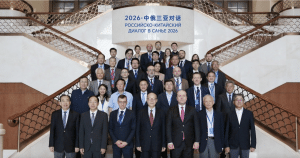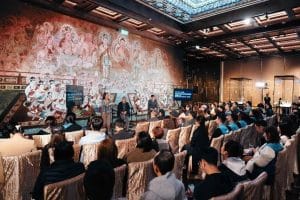
The Institute for Sustainable Communities (ISC) chaired a two-day exchange in Beijing from November 27 to 28, 2025, bringing together over 50 representatives from government agencies, research institutions, international organizations, and grassroots groups to discuss innovative practices for strengthening climate resilience in local communities.
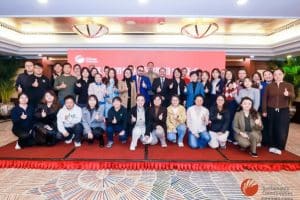
The exchange highlighted the distinct pathways through which different actors can contribute to climate-resilient community building, while calling for deeper cross-sector synergy and the integration of local, gender and international perspectives to promote fair and sustainable practices. A recurring theme was the importance of fostering endogenous motivation within communities to develop localised solutions. This was vividly illustrated by the conference’s concluding visit to Beijing’s Organic Farmers Market – a community-based space where consumers engage directly with farmers committed to sustainable agricultural practices.
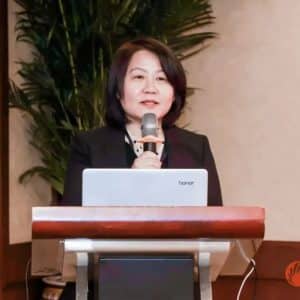 Ms. Ren Jingzhe, Program Director of ISC’s Climate Resilient Communities Program
 Mr. Daniel Wald, Vice President of International Programs at ISC
Data for Empowering Climate Adaption
Dr. Pan Tao, China Director at ISC, highlighted the importance of collecting precise data and using case studies for climate-risk identification. He pointed out that a single extreme rainstorm can cause households in peri-urban① areas to “fall back into poverty overnight,” while functional recovery may take as long as 6–24 months. Given the complex and long-term nature of post-disaster reconstruction, he emphasised that up to 60% of disaster-related losses can be avoided through proactive adaptation measures.
As illustrative case studies, Dr Pan cited the One Seattle Climate Portal in the US – an interactive map tracking neighbourhood-level emissions, and a mangrove restoration project initiated by the Livelihood Carbon Funds in Indonesia, which restore coastal ecosystems to mitigate disaster risks such as tsunamis.②
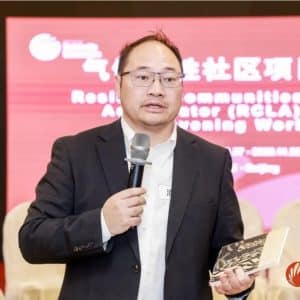 Dr. Pan Tao, China Director at ISC
Ms Du Xin, Senior Project Manager at the China Blue Sustainability Institute, presented the fishing community of Beigang Island in Hainan Province as an example of data-driven risk-assessment in practice. Through questionnaires and interviews with local fishermen, the project identified typhoons and declining fish stocks, compounded by policy and market factors, as complex threats to local livelihoods. This case was selected as a representative example of climate-adaptation in China at COP30, demonstrating a scientific and practical model for systemic adaptation in coastal communities. ③
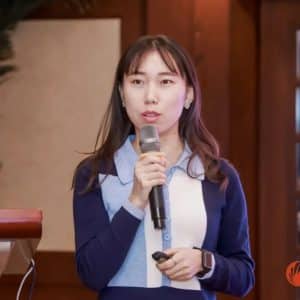 Ms Du Xin, Senior Project Manager at the China Blue Sustainability Institute
Gender, International and Local Perspectives in Climate Action
Ms. Shi Xin systematically reviewed China’s practices and reflections on promoting women’s comprehensive development in addressing climate change. She noted that while China has established a sound legal and policy framework for protecting women’s rights, there is significant potential to further integrate gender perspectives into climate and environmental policies. In practice, women actively participate and play important roles in environmental protection, emergency management, and green lifestyles. Looking ahead, she suggested strengthening the gender perspective in climate governance, enhancing data statistics, and promoting international cooperation to further elevate women’s role as key actors in climate action.
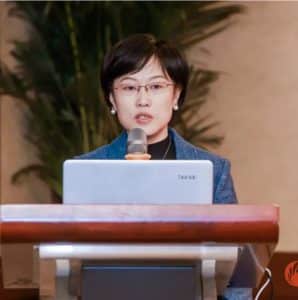 Shi Xin, Associate Research Fellow at the Women’s Research Institute of the All-China Women’s Federation (ACWF)
Ms Li Xiaoqiong, Senior Researcher at the Chinese Academy for Environmental Planning (CAEP), introduced a joint report with UN Women, which found that although Chinese women enjoy legal equality, their participation as key actors in climate action – while increasing – remains limited. She therefore called for stronger coordination and targeted research to better leverage women’s perspectives and capacities in climate governance.④
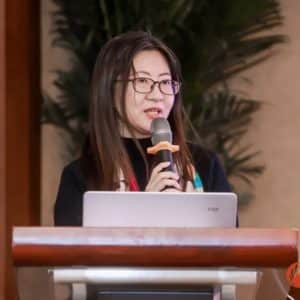 Ms Li Xiaoqiong, Senior Researcher at the Chinese Academy for Environmental Planning (CAEP)
On international cooperation, Mr Fei Weiliang from the Foreign Cooperation and Exchange Center of the Ministry of Ecology and Environment outlined China-ASEAN bilateral mechanisms for climate adaptation. These include climate-resilient sister-city initiatives, marine plastic reduction programs, and climate financing, all of which have helped deepen practical cooperation between the two sides.
 Fei Weiliang, Associate Research Fellow at the Foreign Cooperation and Exchange Center (FECO) / China-ASEAN Environmental Cooperation Center (CAECC), Ministry of Ecology and Environment (MEE)
Several speakers also emphasised the role of education and traditional knowledge in raising awareness of climate risks and developing localised adaptation strategies. Ms Yu Xianrong from the Ministry of Ecology and Environment’s Publicity and Education Center shared a wide range of educational approaches, from school-based programs to online activities on streaming platforms, aimed at maximising outreach and community participation to drive genuine behavioural change.
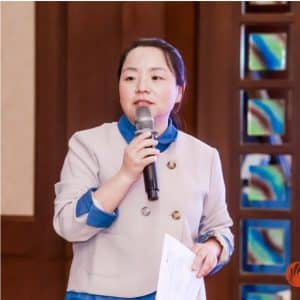 Yu Xianrong, Director of the Department of Nature Education, Communication and Education Center (CEC), Ministry of Ecology and Environment (MEE)
Mr. Hong Liwei, Rural Development and Climate Policy Officer at Oxfam Hong Kong, presented Oxfam’s experience in promoting climate-resilient agriculture in Wangjinzhuang, Hebei Province. The project supported the local community through four key initiatives: protecting indigenous seeds through a community seed bank; restoring traditional water cisterns with smart monitoring systems; developing regenerative agriculture practices such as donkey-manure composting; and expanding alternative income streams, including eco-tourism. Central to the project’s success was the stimulation of endogenous community motivation and integration of traditional knowledge with modern technology, resulting in a truly localised, sustainable and replicable adaptation model.⑤
 Hong Liwei, Rural Development and Climate Policy Officer at Oxfam Hong Kong
Mr. Ni Yao shared a community-based “three-step” model to systematically enhance residents’ climate and environmental awareness and self-governance capacity through standardized assessments and curriculum intervention, co-building ecological public spaces, and self-governance guidance. Supported by a supporting curriculum system and expert network, the project promotes the construction of resilient facilities such as community ecological gardens and establishes environmental self-governance mechanisms, effectively advancing grassroots climate governance and sustainable behavioural change.
 Ni Yao, Director of the Strategic Cooperation Department, China Environmental Protection Association (CEPA)
Building a Support System through Platforms and Multi-Stakeholder Collaboration
Organisations from diverse sector – including platform-based organisations, grant-making foundations, and providers of technical assistance – jointly outlined the support systems needed to strengthen climate-resilient communities.
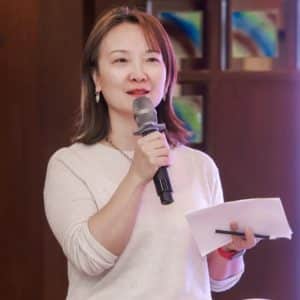 Hu Difei, Moderator of the Roundtable Discussion and Senior Advisor of ISC’s Resilient Communities Program
Mr. Wang Zhuolun, Executive Director of the China Development Brief (CDB), observed that while most community-based organisations (CBOs) clearly recognise the impacts of climate change, they often face difficulties in securing stable funding for climate-related initiatives. In this context, platform-based organisations such as CDB can play a bridging role by offering capacity-building workshops and English communication support during international exchanges, thereby connecting CBOs with global resources. Wang highlighted platforms’ unique position at the intersection of research, communication, and outreach in facilitating cross-sector collaboration beyond traditional boundaries.
 Wang Zhuolun, Executive Director of the China Development Brief (CDB)
Mr. Lü Hangzhou, Scientific Advisor at the Yunnan Xieli Nonprofit Support Center, discussed the potential of online platforms to empower CBOs with technical tools. He shared how his centre developed and distributed community-level climate risk-assessment tools to more than 80 organisations through its online platform. By lowering the technical threshold for participation, this platform-based approach significantly increased community engagement, enabling local actors to identify risks and develop response strategies independently rather than relying solely on external solutions.
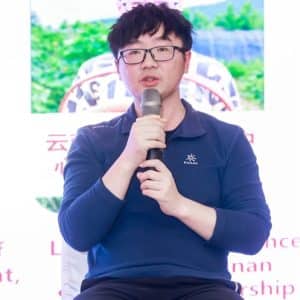 Lü Hangzhou, Scientific Advisor at the Yunnan Xieli Nonprofit Support Center
At the community level, however, climate change is often perceived as an abstract and distant global issue. In response, Mr Li Dajun, Director of the Industry Support Programme at the Beijing Heyi Green Foundation, called for innovative approaches that go beyond technical assistance. He emphasised the importance of cultivating genuine motivation within communities by translating “big issues” like climate change into “small actions” closely connected to people’s everyday lives.
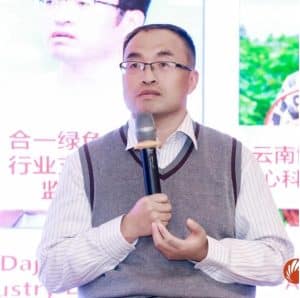 Li Dajun, Director of the Industry Support Programme at the Beijing Heyi Green Foundation
Conclusion: Innovating with Local Wisdom
This exchange convened a wide range of stakeholders engaged in climate action in China and highlighted the diverse contribution each can make toward building climate-resilient communities. There was broad consensus that while international experience and gender perspectives are essential, sustainable climate action depends even more on restoring, valuing, and innovating with local wisdom. By grounding global challenges such as climate change in local realities and daily practices, communities can better engage with and respond to these issues. Ultimately, beyond technical tools and policy frameworks, true empowerment lies in stimulating endogenous motivation to foster locally driven and sustainable solutions.
_____________________________
① Due to irregular and poor urban development caused by rapid growth, peri-urban communities are more vulnerable to natural and climate-change related disasters such as floods or droughts.
② Livelihoods, “Mangrove restoration: Successes and Challenges in North Sumatra & Aceh,” August 7, 2024, https://livelihoods.eu/mangrove-restoration-successes-and-challenges-in-north-sumatra-aceh/
③ Chen Bowen, “Baoting, [Hainan] positions itself as model for COP30 climate action,” China Daily, October 22, 2025, https://www.chinadaily.com.cn/a/202510/22/WS68f8b17ba310f735438b65e6.html
④ UN Women “Understanding China’s Climate and Environmental Policies through Gender Perspective,” Research Papers (2025), https://asiapacific.unwomen.org/en/digital-library/publications/2025/11/understanding-china-s-climate-and-environmental-policies
⑤ Oxfam Hong Kong, “The Development of Climate-Resilient Agriculture in Wangjinzhuang,” https://www.oxfam.org.hk/en/what-we-do/development-programmes/mainland-china/the-development-of-climate-resilient-agriculture-in-wangjinzhuang