1. Several ministries have introduced relevant policies and measures to provide institutional support for the internationalization of civil organizations.
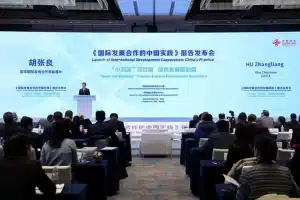
On February 11, the China International Development Cooperation Agency (CIDCA) held a press conference for the “Small and Beautiful” volume of China’s Practice in International Development Cooperation. Non-governmental forces, including social organizations, have gained increasing momentum.
Leveraging their advantages in flexible project initiation and specialized expertise, they have actively explored the implementation of “Small and Beautiful” projects, generating positive feedback.
Regarding the progress and achievements of these projects, the report proposes mobilizing diverse resources and actors—including social organizations—to provide comprehensive, full-chain assistance to disaster-stricken countries. In the concluding remarks and future outlook, the report encourages and guides local governments, enterprises, think tanks, universities, and social organizations to jointly play their roles.
On September 10, the Ministry of Civil Affairs issued the Model Charter for International Social Organizations (Trial). This marks the first regulatory document in China specifically targeting the management of international social organizations. The Model Charter applies to international, non-profit social groups initiated by domestic and international promoters, registered in China, and dedicated to advancing international cooperation, enhancing international exchanges, and participating in international affairs.
The purpose of this Model Charter is to serve as a template for international social organizations when formulating or revising their own charters, thereby standardizing their governance practices. New international social organizations applying for registration must formulate their charters in accordance with this Model Charter. Existing international social organizations may, under the guidance of their supervisory units.
On December 5, the Ministry of Commerce (MOFCOM) released the Guidelines on Corporate Social Responsibility for Chinese Enterprises Operating Abroad (Letter No. 673 [2025], hereinafter referred to as the “Guidelines”).
Article 14 identifies improving people’s livelihoods and well-being as a key orientation for overseas business operations and encourages the implementation of “Small and Beautiful” projects to support poverty reduction and improve living standards in host countries, thereby promoting people-to-people connectivity.
Article 23 suggests that enterprises should, within their capacity, assist in building community public welfare facilities, donate essential supplies, support vulnerable groups, safeguard the lawful rights and interests of women and children, and contribute to science, education, culture, and health.
Article 50 calls for strengthened communication and engagement with NGOs in host countries. Enterprises are encouraged to highlight the contributions of their overseas operations to the sustainable economic, social, and environmental development of local communities.
2. Civil organizations host side events alongside the Global Women’s Summit.
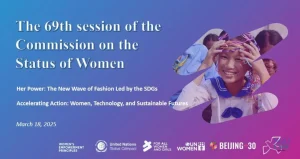
From March 10 to 21, the 69th Session of the Commission on the Status of Women (CSW69) was held at the United Nations Headquarters in New York. Centered on the theme of “Accelerating the Achievement of Gender Equality and the Empowerment of Women,” the session reviewed progress and planned future actions for the implementation of the Beijing Declaration and Platform for Action on its 30th anniversary.
On March 18, two side events —”Her Power: Sustainability as the New Normal” and “Accelerating Action: Women, Technology and a Sustainable Future”—were held in New York City. Co-hosted by the NGO Committee on the Status of Women and the China International Council on the Promotion of Public and Private Partnerships (CICOPP), with participation from partners such as the Pinglan Foundation and Yousi Foundation, these events aligned closely with the core agenda of CSW69 agenda and facilitated in-depth discussions on improving and innovating of global gender equality governance.
On August 11, during the 2025 APEC Policy Partnership for Women and the Economy (PPWE) meetings, the China Women’s Development Foundation (CWDF) organized a “Philanthropy Roundtable Dialogue on APEC Her Power for a Sustainable Future” in Incheon, Republic of Korea, promoting experiences sharing and injecting new momentum into regional gender equality and women’s empowerment.
From October 30 to 31, the “Equal Future, Empowered Action: Beijing +30 Commemorative Event” was successfully held in Beijing. Organized by the China Association for NGO Cooperation (CANGO) with support from UN Women China, the event reviewed China’s practices in gender equality and explored new pathways for future development.
3. The 2nd International Civil Society Solidarity Conference on the Global Development Initiative Opens
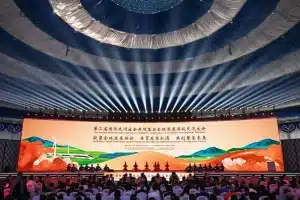
On September 10, the Conference was inaugurated in Hohhot, Inner Mongolia.
Themed “Building Global Consensus on Development, Sharing Opportunities, and Creating a Prosperous Future,” the conference brought together over 300 Chinese and international participants from more than 50 countries to discuss global development cooperation.
Guided by the International Department of the CPC Central Committee and co-organized by CICOPP and the People’s Government of Inner Mongolia, the conference features an opening ceremony, cooperation matching sessions, and thematic seminars.
An exhibition centered on the “Six Principles of Adherence” of the Global Development Initiative integrated case studies, immersive performances, traditional arts, and AI visual technologies, vividly showcasing civil society contributions to development cooperation.
4. A brand matrix for people-to-people and cultural exchanges takes shape.
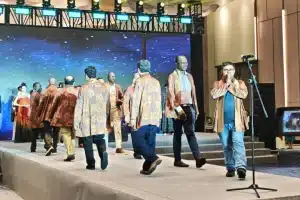
From May 29 to 31, the 4th Dialogue on Exchanges and Mutual Learning Among Civilizations was held in Dunhuang, Gansu Province, co-hosted by the Chinese People’s Institute of Foreign Affairs (CPIFA) and the Gansu Provincial Government.
Approximately 400 participants from 60 countries attended. The program featured f forums, side events, and innovative cultural shocases, including intangible cultural heritage experiences and AI enabled exhibitions.
CPIFA later hosted a training program for European and American sinologists under the theme “Sinology Bridging China and the World”,
Meanwhile, CANGO’s Specialized Committee for People-to-People Exchange developed signature brand series such as “Taste China · City Moments” and “Connecting the World,” promoting local development and cross-cultural exchange through themed events in Quanzhou, Anyang, and Handan.
5. Civil society organizations participate in Myanmar earthquake relief
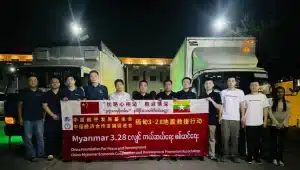
Following the earthquake in Myanmar on March 28, CANGO coordinated with emergency authorities and guided member organizations to participate in relief efforts in an orderly manner.
Multiple Chinese rescue teams responded swiftly, conducting search and rescue operations, providing medical assistance, and distributing supplies. The China Foundation for Rural Development established the first temporary settlement community in the Mandalay earthquake zone.
Numerous NGOs launched donation campaigns and emergency response initiatives to provide targeted support based on the actual needs.
6. Civil society organizations and other stakeholders have actively carried out international volunteer service activities.
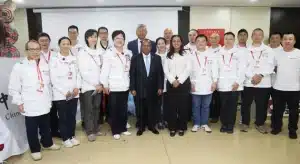
Throughout the year, various organizations implemented international projects across education, health, and community development sectors. Key initiatives include:
the “Bridge of Friendship” vocational education program in Cambodia,
the China Volunteer Doctors Africa Medical Charity Campaign in Ethiopia, and
the establishment of the Guangdong Academy of International Volunteer Service.
These efforts strengthened people-to-people ties and expanded China’s global volunteer engagement.
7. Civil organizations contribute multilateral governance platforms.
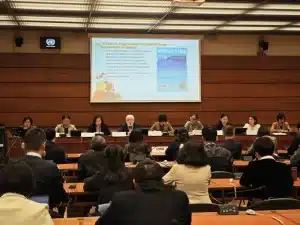
Chinese civil organizations actively participated in UN platforms, including multiple sessions of the UN Human Rights Council and the High-Level Political Forum on Sustainable Development.
Side events, exhibitions, and forums showcased grassroots contributions to gender equality, human rights, social inclusion, and sustainable development, enhancing civil society’s voice in global governance.
8. China’s first non-governmental deep-sea medical rescue vessel, the “Pinglan,” has been officially launched.
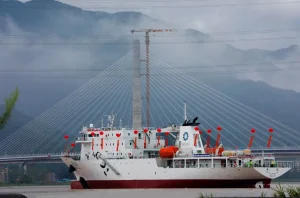
On September 23, China’s first non-governmental deep-sea medical rescue vessel, the “Pinglan,” was officially launched in Linhai, Taizhou, Zhejiang Province.
With a length of 100.15 meters, displacement of 5,000 tons, and a range of 15,000 kilometers, the vessel integrates medical care, rescue, and training functions. Initiated by CNIE and built by the Beijing Pinglan Charity Foundation, it will serve countries along the Belt and Road by providing medical assistance and disaster response services.
9. CFRD deepens international engagement
The China Foundation for Rural Development continued expanding its overseas presence, marking the 10th anniversaries of its Nepal and Myanmar offices and releasing evaluation reports for its “Smiling Children” School Feeding Program.
Over the past decade, the program has expanded to eight countries, benefiting more than 100,000 students and demonstrating the impact of “small but beautiful” livelihood cooperation.
10. The 2025 Asia Philanthropy Forum held in Boao
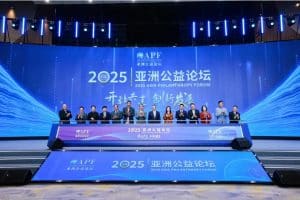
From November 29 to December 2, the 2025 Asia Philanthropy Forum was held in Boao, Hainan, under the theme “Open Collaboration, Innovative Development.”
More than 600 delegates from 16 countries participated, with over 900,000 online viewers. Highlights included the release of the “Asia Philanthropy Models” list and the launch of the International Civil Society Poverty Reduction Cooperation Network—Asia Action, marking a step toward institutionalized regional collaboration.