“The Bangkok sun shines every morning, but I have never felt its warmth. Every sunrise reminds me that another day has passed without knowing where my daughter and I belong. I have waited for thirteen years, and I am still waiting.”
These were the words of a Somali refugee we interviewed in Bangkok.
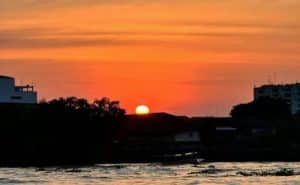
Sunset in Bangkok
When we met a Somali refugee in Bangkok, she quietly told us her story. She had fled Somalia after facing domestic abuse at the hands of her husband. She believed that once she escaped, she would finally be safe. Instead, she found herself trapped in another form of uncertainty. For more than a decade, she has been waiting for legal recognition and the chance to rebuild her life. Her experience reflects the reality faced by many refugees in Thailand, where legal uncertainty continues long after they have escaped persecution.
Her story is not unique. For decades, Thailand has served as a place of refuge for people fleeing war, persecution, and political violence from countries such as Myanmar, Afghanistan, Pakistan, and Somalia. Although refugees and asylum seekers escape immediate danger, many continue to experience prolonged legal uncertainty after arriving in Thailand.
Unlike many other countries, Thailand has not acceded to the 1951 Refugee Convention or its 1967 protocol. As a result, refugees are not formally recognized under Thai law and are generally treated under immigration law rather than refugee law. Without legal recognition, many are unable to obtain work permits, secure long-term residency, or access comprehensive social protection. Rather than functioning solely as an administrative issue, legal status fundamentally shapes refugees’ opportunities to rebuild their lives.
This legal uncertainty affects refugees far beyond their immigration status. The constant risk of arrest, immigration detention, and deportation influences many aspects of everyday life, including employment, healthcare, education, and long-term stability. While humanitarian organizations can alleviate some immediate hardships, they cannot substitute for the legal rights and protections that enable refugees to rebuild independent lives.
Across conversations with refugees from different backgrounds, one message emerged repeatedly: legal recognition is far more than an administrative status. It shapes whether people can work, support their families, access healthcare, and begin rebuilding their lives.
Economic Consequences: The Loss of Economic Independence
“I want to rely on my own skills and earn my own income,” shared a Sri Lankan refugee.
Her words reflected a common aspiration shared by many refugees. Throughout our interviews, refugees consistently identified the legal right to work as their greatest need, not only to earn a living, but also y to regain independence, dignity, and the ability to support their families.
However, under Thailand’s current legal framework, most refugees are unable to obtain legal work permits, regardless of their skills, qualifications, or previous work experience. This lack of access to work authorization limits their ability to turn existing skills and experience into formal and sustainable employment. As a result, economic independence remains beyond their reach.
For example, before fleeing political persecution in Sri Lanka, one interviewee owned a clothes workshop and had years of experience managing her own business. After arriving in Thailand, she refused to abandon her entrepreneurial aspirations. Instead, she continued sewing and participated in vocational training programs organized by Hope Bangkok, where she learned to produce handmade bags, pouches, and other handicrafts. The products were sold through fundraising events and partnerships organized by the NGO. However, although the products generated income, the refugee women were not legally paid as employees. Instead, the proceeds were redistributed as donations to help cover basic living expenses such as rent, food, and utilities, as they did not have the legal work authorization required for formal employment.
Hope Bangkok explained that its programs are intended to provide temporary financial support and equip refugees with practical skills that may become valuable if they are eventually resettled in a third country, rather than creating long-term employment opportunities within Thailand. Consequently, while NGOs can help refugees survive, they cannot provide the legal right to work. This leaves many refugees in the same situation: they possess the skills, motivation, and determination to become economically independent, yet the absence of legal status and work authorization prevents them from transforming those abilities into sustainable livelihoods.
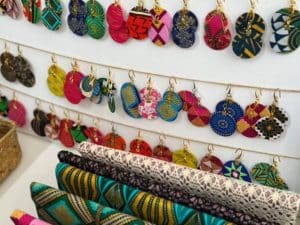
Handicrafts made by refugees in Hope Bangkok
Social Consequences: Barriers to Rebuilding Everyday Life
“Our son is our biggest motivation. We hope he can receive a good education, grow up in a safe environment, and have a future that is better than ours,” shared a Pakistani asylum seeker family during our interview.
Their hope reflects a broader challenge faced by many refugee families in Thailand.
Beyond limiting employment opportunities, the absence of legal recognition also affects refugees’ ability to rebuild stable everyday lives. One of the most significant social consequences of this legal uncertainty is the uncertain and uneven access to essential services, particularly healthcare and education. For refugees without stable legal status, access to these services may depend partly on humanitarian organizations, community initiatives, and the family’s own financial resources rather than on secure and consistent access to public services. Although humanitarian organizations and community initiatives help bridge these gaps, access often depends on charitable support rather than guaranteed legal rights, leaving many families uncertain about whether these services will remain available in the future.
Healthcare was one of the most immediate concerns. For example, one Pakistani family explained that the father suffers from a serious back injury caused by years of construction work in Pakistan. While Tzu Chi, a humanitarian charity organization from Taiwan, provides free medical consultations and medication, the treatment has not improved his condition, leaving him unable to return to work and support his family. NGO workers similarly explained that high medical costs remain one of the greatest challenges facing refugee families, particularly for those without legal documentation or stable incomes. This case does not show that legal status alone prevents refugees from receiving adequate treatment. Rather, it illustrates how legal uncertainty can interact with limited income and dependence on humanitarian assistance, making long-term healthcare difficult to access. Their experience illustrates that humanitarian healthcare can address immediate needs but often cannot provide the comprehensive or long-term treatment required for chronic conditions.
Education presented a contrasting yet equally important challenge. During our visit to the Good Shepherd Sisters Bangkok Learning Centre, we observed how education can become one of the few sources of stability for refugee children. The center provides free educational support, including Thai, English, mathematics, and other enrichment classes, taught by volunteers for refugee and low-income children. Many of the children were still very young, some only around five years old, yet they attended classes every day in a welcoming and supportive environment. While some children were also enrolled in Thai public schools, others were unable to attend formal education because their families could not afford school-related expenses or because their unresolved legal status created additional barriers to accessing public services. The center served not only as a place of education but also as a safe community where children could develop friendships, routines, and a sense of stability despite the uncertainty surrounding their legal status. However, NGO staff emphasized that such programs depend heavily on external funding and volunteers rather than government provision.
Together, the healthcare and education cases illustrate a broader pattern: humanitarian organizations can help refugees access essential services, but this access may remain dependent on charitable support rather than stable institutional arrangements. Consequently, refugees’ access to healthcare and education remains uneven and uncertain, demonstrating that while humanitarian organizations can reduce immediate hardship, they cannot replace stable, long-term access to essential public services that refugees can reliably access regardless of changes in humanitarian funding or support.
Psychological Consequences: Loss of Identity and Mental Well-being
“Before coming to Thailand, I was always the one helping other people. Now, I have become someone who depends on other people’s assistance,” reflected a Pakistani refugee mother.
For many refugees, identity is shaped not only by who they are, but also by the roles they fulfil within their families and communities. However, prolonged displacement and restrictions on legal employment opportunities can prevent individuals from continuing the roles that previously provided them with purpose, recognition, and a sense of self-worth. Over time, this loss of identity can profoundly affect their mental well-being.
For example, before fleeing religious persecution in Pakistan, the interviewee worked as a science teacher and held a master’s degree in physics education. She described teaching as more than simply a job; it was the way she contributed to society and found purpose in her daily life. After arriving in Thailand, however, she was no longer able to continue that role. Instead, she had to rely on humanitarian assistance, a transition she described as one of the most difficult aspects of becoming a refugee. She explained that losing the ability to help others had severely damaged her self-esteem and contributed to her depression. Combined with the loss of one of her children, her husband’s serious illness, and years of uncertainty about her family’s future, she often found herself crying alone in her room. Her experience illustrates that the psychological consequences of displacement cannot be attributed to legal exclusion alone. However, the inability to continue a profession and social role that had previously given her purpose added another dimension to her experience of loss and uncertainty. By limiting their ability to maintain the professional and social roles that once gave their lives meaning, legal and social exclusion can become part of a broader experience of displacement, affecting both their sense of self and their mental well-being.
Agency Within Legal Constraints
Throughout our fieldwork, one consistent pattern emerged across every interview. Although refugees experienced significant legal, economic, and social barriers, they were not passive recipients of humanitarian assistance. Instead, they actively sought opportunities to rebuild their lives despite prolonged uncertainty. The Sri Lankan refugee continued developing new vocational skills while hoping to establish her own business. The Pakistani refugee mother expressed her determination to return to teaching, while her daughter aspired to become a doctor. Refugee volunteers at AAT chose to support newly arrived asylum seekers because they understood the challenges of displacement firsthand. Parents consistently prioritized their children’s education, and many refugees invested time in learning Thai to better integrate into local communities.
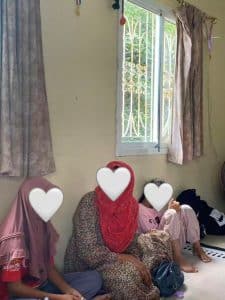
Pakistani refugee women and their children
These experiences suggest that refugees’ difficulties in rebuilding their lives cannot simply be explained by a lack of motivation or ability. Rather, their efforts to rebuild are also constrained by structural barriers created by legal exclusion. At the same time, their efforts show that refugees continue to exercise agency within these constraints. Their resilience highlights an important finding of this study: refugees are not merely survivors of displacement, but active agents striving to regain independence, dignity, and a sense of purpose.
However, their efforts remain shaped by the legal environment in which they live: skills training, volunteering, language learning, and community support can help them rebuild aspects of their lives, but they cannot by themselves remove the structural barriers to long-term stability.
The NSM: Progress and Remaining Limitations
The introduction of Thailand’s National Screening Mechanism (NSM) in 2023 represents one of the country’s most significant developments in refugee protection in recent years. For the first time, the NSM established a formal government process through which certain displaced persons can be recognized as “Protected Persons.” Unlike previous arrangements, where protection depended largely on humanitarian organizations and UNHCR, the NSM provides an official domestic framework that acknowledges the protection needs of people fleeing persecution. This marks an important shift from treating all displaced people solely under immigration law towards recognizing that some individuals require international protection.
However, the implementation of the NSM remains limited. Many refugees and asylum seekers are still ineligible for the program, while those who do qualify often face lengthy procedures and uncertainty before receiving protection. As a result, legal recognition does not automatically guarantee access to employment, stable legal status, or comprehensive public services. During our fieldwork, refugees continued to describe uncertainty surrounding work, education, healthcare, and their long-term future, suggesting that the practical impact of the NSM has not yet fully addressed the challenges identified throughout this research.
The NSM therefore provides an important contrast to the experiences described above. The development of a formal mechanism for legal recognition suggests that Thailand’s approach is beginning to move beyond treating displacement solely as an immigration issue. However, the experiences of the refugees interviewed in this study also show that recognition is meaningful only when it translates into practical rights and greater stability in everyday life. The NSM represents progress, but its limited implementation means that many refugees continue to face the same barriers to rebuilding their lives identified throughout this research.
This gap between formal recognition and meaningful protection is important to understanding the broader significance of the NSM. Legal recognition can provide a foundation for protection, but its value ultimately depends on whether it enables refugees to work, access essential services, maintain family stability, and plan for their future.
Although many of the challenges identified in this study remain unresolved, Thailand’s refugee protection system has gradually begun to evolve. The introduction of the National Screening Mechanism (NSM) represents an important step towards formally recognizing and protecting certain displaced persons. While its implementation remains limited and many refugees continue to experience legal uncertainty, it reflects a gradual shift in Thailand’s approach to refugee protection.
Overall, legal recognition is not simply about legal status; it is the foundation that determines whether refugees can move beyond survival and begin rebuilding their lives. Through interviews with refugees and local organizations, this study shows that the greatest barriers refugees face are not a lack of determination or ability, but the structural and legal constraints that limit their ability to turn their skills, aspirations, and efforts into stable opportunities.