
Written by:
Martin Kabaluapa Kapinga
Chief, Country Offices Management Division
WWF International
Exploring Chengdu’s Treasures: A Journey into Panda Conservation and Biodiversity Protection
During the week of 19 November 2025, I had the privilege of visiting two remarkable conservation sites in Sichuan Province—Dujiangyan Panda Valley and the LongxiHongkou National Nature Reserve. These experiences left me deeply inspired by the commitment to wildlife protection and ecosystem stewardship in this region.
Chengdu: Gateway to Nature and Culture
Chengdu, the vibrant capital of Sichuan Province, is home to more than 20 million residents and serves as a major economic and cultural hub in southwest China. Known as the “Land of Abundance,” it blends a rich historical heritage with modern dynamism. The city is globally celebrated for its culinary traditions—especially Sichuan cuisine—and for being the epicenter of giant panda conservation.

Dujiangyan Panda Valley: Encountering the Icons
One of the highlights of my trip was visiting the DujiangyanPanda Valley. Located about 60 kilometers northwest of Chengdu, this 50-hectare facility is dedicated to giant panda rehabilitation and reintroduction into the wild. As I walked through its semi-natural habitats, I had the unforgettable opportunity to observe both the iconic giant panda and the elusive red panda—two flagship species of global conservation.
The giant panda is not only a national treasure of China but also the emblem of WWF, symbolizing the world’s commitment to preserving wildlife and ecosystems. WWF was the first international environmental NGO invited by the Chinese government in 1980, marking the beginning of its long-term conservation work for the giant panda.

Caption: A giant panda resting in a bamboo grove at Dujiangyan Panda Valley.
About Giant Pandas:
Giant pandas (Ailuropoda melanoleuca) are instantly recognizable with their striking black-and-white coats. Native to China’s mountainous bamboo forests, they are currently classified as vulnerable, with about 1,900 individuals remaining in the wild. Their diet almost exclusively of bamboo.
About Red Pandas:
Red pandas (Ailurus fulgens), often affectionately called “firefoxes,” are much smaller and arboreal, spending most of their lives in the treetops. Classified as endangered, fewer than 10,000 individuals remain in the wild, threatened primarily by habitat loss and poaching.
Sichuan Longxi–Hongkou National Nature Reserve: Guardians of the Forest
Covering31,000-hectares, the Longxi—Hongkou Reserve is home to rare and endangered species such as the golden snub-nosed monkey, Sichuan takin, and panda. During my visit, I met the dedicated forest guards who patrol the reserve to safeguard biodiversity and protect the watershed that supports communities downstream.

Caption:Natural disasters are one of the major drivers of habitat fragmentation for giant pandas. Communities near the reserve are currently rebuilding in their aftermath.
What Makes Their Work Remarkable:
• Forest guards are government employees serving the national reserve system.
• They join the main forest protection station for 22 consecutive days at a time, living in remote conditions to patrol the forest efficiently, often facing rugged terrain, isolation, and harsh weather.
• Their work goes beyond patrolling. They also conduct environmental education programs and collaborate with local communities, engaging residents as guides or laborers and fostering a shared sense of responsibility for nature conservation.
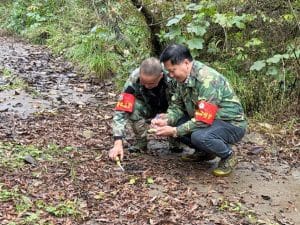
Caption:Rangers recording wildlife track.

Caption: Forest guards on patrol in the misty mountains of Longxi–Hongkou Reserve / in conversation with Martin during the November visit.

Caption:The local community’s female patrol team consists of seven women rangers.
Quote from a Forest Guard:
“Seeing the lush mountains, I feel fulfilled. Every patrol reminds me why we endure the hardships—because these forests are life for both wildlife and people.”
How WWF Supports These Efforts
WWF plays a pivotal role in panda and biodiversity conservation in China through:
• Establishing and Strengthening Nature Reserves: Supporting the government in creating panda reserves and integrating them into the Giant Panda National Park system.
• Habitat Restoration and Corridors: Promoting reforestation and bamboo corridor development to reconnect fragmented habitats.
• Community Engagement: Encouraging eco-tourism and supporting alternative livelihoods to reduce pressure on forest resources.
• Scientific Research and technical support: Providing expertise and funding for panda population surveys and broader biodiversity conservation.
• Red Panda Conservation: Working in the Eastern Himalayas to protect and enhance red panda populations, reduce human impact, and build community-based conservation initiatives.
Reflections
These visits reinforced the importance of partnership and collaboration in protecting our planet’s natural heritage. From the iconic panda—the face of WWF—to the forest guards who work quietly and tirelessly in remote mountains, every effort contributes to sustaining biodiversity. WWF’s long-standing partnerships in China and beyond remain essential to ensuring that these ecosystems continue to thrive for generations to come.